



Gamboa
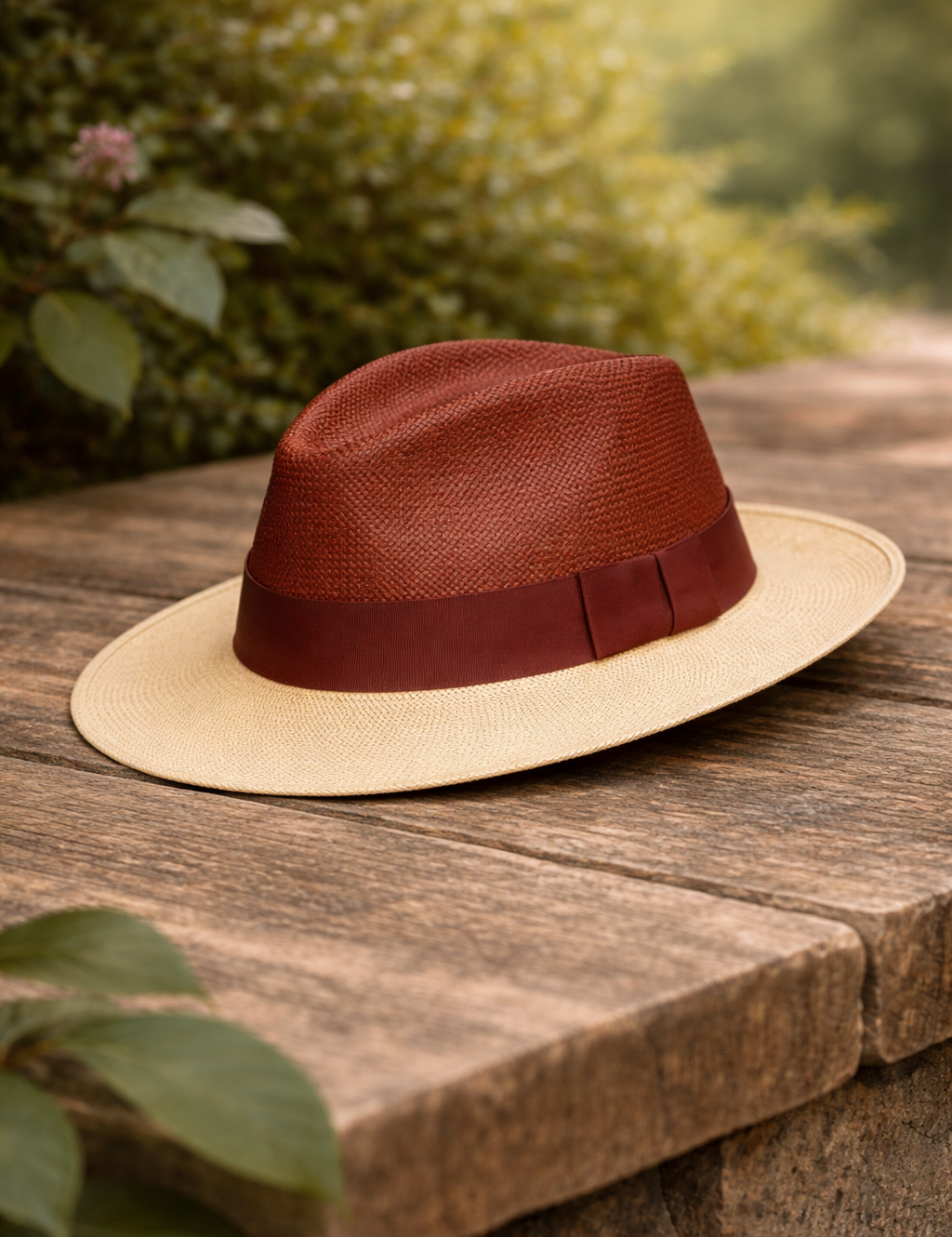
Bicolor Fedora Panama Hut - Terrakotta & Natur | The Color Edit
Bicolor Fedora Panama Hut - Terrakotta & Natur | The Color Edit
Verfügbarkeit für Abholungen konnte nicht geladen werden

Neuheiten | The Color Edit
Wir präsentieren unsere neueste Panama-Hut-Kollektion — eine raffinierte Interpretation von Farbe für die kommende Saison. The Color Edit vereint eine kuratierte Auswahl an einfarbigen und zweifarbigen Modellen, inspiriert von der natürlichen Farbpalette des Frühlings.
Von tiefen Grüntönen und satten Weinfarben bis hin zu warmen Erdtönen und natürlichen Kontrasten spiegelt jedes Stück die Farben der Natur wider, wenn sie zum Leben erwacht. Diese Hüte wurden entworfen, um Alltagslooks aufzuwerten und verleihen ihnen eine mühelose, stilvolle Persönlichkeit.
Handgeflochten mit der gleichen Handwerkskunst und Qualität, die unsere Panama-Hüte auszeichnen, verbindet diese Kollektion Tradition mit einer modernen Perspektive — perfekt für alle, die Farbe auf subtile und elegante Weise tragen.
Starten Sie in den Frühling. Tragen Sie Farbe.
Krone in Terrakotta, Krempe in Natur
Ein raffiniertes zweifarbiges Design, inspiriert von sonnenbeschienener Erde und warmen Landschaften, das eine natürliche Krone mit einer kräftigen Terrakotta-Krempe kombiniert.
Verleiht Frühlingslooks mühelos Kontrast, Struktur und eine markante Farbnote.
Marke: Gamboa
Farbe: Bicolor
Material: Toquilla-Stroh
Krempe: 8 cm (3.15")
Qualität: 3 - 4 (SubFine)
Krone: 11 cm (4.3")
Band: Leinen
Beschreibung: Ein bequemer Hut, handgefertigt in Cuenca, der weltweit bekannten Stadt für Panama-Hüte in Ecuador. Dieser Panama Fedora ist ein hochwertiger, eleganter und zugleich lässiger Hut. Jeder Hut wird individuell geformt und verarbeitet, um höchste Qualitätsstandards zu erfüllen.
Hinweis: Jeder Hut wird aus natürlichen Fasern handgeflochten. Leichte Abweichungen in Farbe, Textur und Form können auftreten und machen jedes Stück einzigartig.
Welche Größe soll ich wählen?
Wir empfehlen die Verwendung unserer Größentabelle mit Maßangaben in Zentimetern und Tipps zur richtigen Messung Ihres Kopfumfangs.
Wenn Ihre exakte Größe nicht verfügbar ist, empfehlen wir, die nächstgrößere zu wählen. Beispielsweise sollten Sie bei Größe 59 und den Optionen 58 und 60 die Größe 60 wählen, um mehr Komfort zu gewährleisten.
Unsere Handwerker
Unsere Handwerker
Die Herstellung des Panamahutes steht ganz im Namen der Familientradition. Kinder lernen vom Vater und geben Ihr Wissen wieder an Ihre Kinder weiter. Die Familien aus den Dörfern der Regionen Cuenca und Montecristi verarbeiten seit Jahrzehnten die feinen Palmzweige zu Strohhüten.
Hierbei werden hohe Anforderungen an die gute qualitative Verarbeitung gestellt, wie z.B.:
- Sorgfältige Auswahl des Toquilla-Strohs unter dem Gesichtspunkt seiner verschiedenen Qualitäten und Sorten.
- Geschicklichkeit bei der Verarbeitung von Hand.
- Kontrolle aller Einzelschritte während der Produktion
Die Geschichte des Panamahutes
Die Geschichte des Panamahutes
Diese Pflanze wächst in den Küstenregionen Ecuadors, Manabi, Guaya, Esmeraldas und Morona Santiago.
Als die Spanier im fünfzehnten Jahrhundert mit ihren Schiffen in der heutigen Provinz Guayas und Manabi landeten, sahen sie Eingeborene mit Hüten, welche sie nutzten um Nacken und Ohren vor der Sonne schützten. Da die Hüte den damaligen Nonnenhauben in Europa glichen nannten sie sie " Toquillas" was "kleine Haube", oder auch" Schulterschutz" bedeutet. Da der Panamahut aus besagten Palmzweigen hergestellt wird, setzte sich bald der Name "Paja Toquillas" durch, was so viel wie "Strohhut" bedeutet.
Die Legende besagt, dass der Panamahut bei der Durchquerung des Panama-Kanals 1913 seinen Namen bekam. Damals erhielt Teddy Roosevelt als Geschenk einen dieser Strohhüte und bedankte sich für den "Panamahut".
Im 18. und bis ins 19. Jahrhundert gewann der Panamahut zunehmend an Popularität. Er wurde in der ganzen Welt bekannt, so z.B. 1900 auf der Expo in Paris oder während der Zeit des Goldfiebers in Kalifornien.
Der Panamahut stammt also aus Ecuador. Er wird von Hand und hauptsächlich in den Regionen Cuenca und Montecristi hergestellt. Das Geheimnis seiner Herstellung wird von Generation zu Generation weitergegeben und jeder einzelne Hut ist einzigartig.
Jeder Panama-Hut ist einzigartig und handwerklich vollkommen, deswegen braucht er besondere Pflege.

Finden Sie Ihre Größe
Nachdem Sie nun Ihre Kopfgröße kennen, prüfen Sie bitte anhand der Größentabelle, welche Größe für Sie am besten passt..
| Hutgröße | Zentimeter | Zoll | US-Größe |
| S | 56cm | 22" | 7 |
| M | 58cm | 22 3/4" | 7 1/4 |
| L | 60cm | 23 1/2" | 7 1/2 |
| XL | 62cm | 24 3/8" | 7 3/4 |
Hutgrößenreduzierer
Gamboa Panamahüte werden mit einem Größenreduzierband geliefert, damit Ihr Hut perfekt passt.
So funktioniert es:
1. Verwenden Sie sie nur, wenn die Mütze etwas locker sitzt.
2. Sie müssen die Bänder in die Mütze stecken, direkt unter das Schweißschutzband.
3. Stellen Sie die Bänder nebeneinander.
4. Es ist wichtig, sie zu platzieren, wenn Sie zusätzlichen Platz haben:
- Läuft die Mütze etwas länger, müssen Sie die Bänder vorne und hinten an der Mütze anbringen.
- Fällt die Mütze etwas breiter aus, müssen Sie die Bänder links und rechts an der Mütze anbringen.
Finden Sie Ihre Größe


Finden Sie Ihre Größe


Grad
Der "Grad" für Panama-Hüte kennzeichnet die Qualität des Gewebes, Es werden hierbei die Fasern pro Quadratzoll gezählt. Je größer die Zahl, desto feiner ist der Panama-Hut.Hüte biegen
 |
 |
 |
 |
La boîte parfaite pour votre Chapeau Panama
