



Gamboa
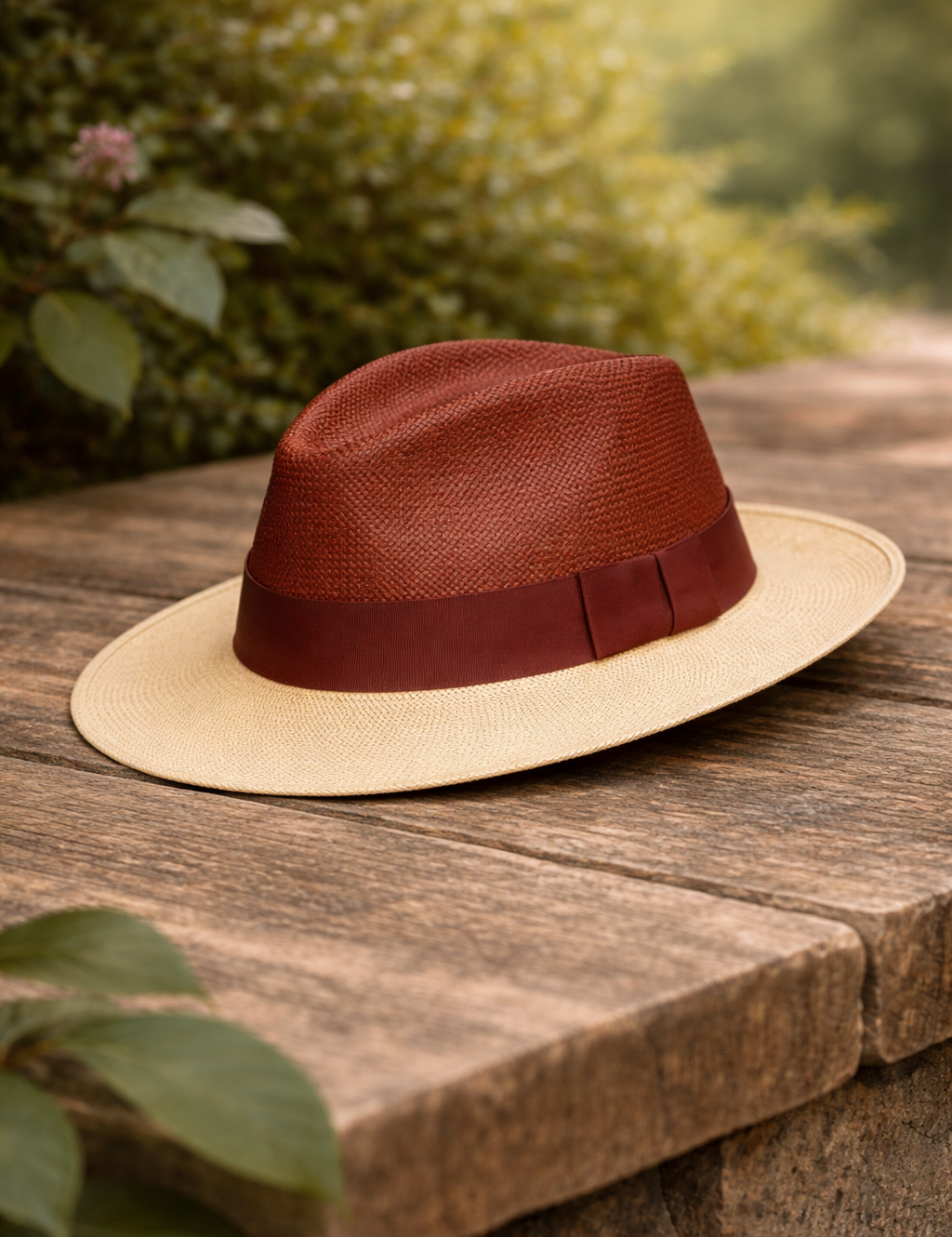
Bicolor Fedora Panama Hat - Terracota & Natural | The Color Edit
Bicolor Fedora Panama Hat - Terracota & Natural | The Color Edit
Couldn't load pickup availability

New Arrivals | The Color Edit
Introducing our latest collection of Panama hats — a refined take on color for the season ahead. The Color Edit brings together a curated selection of solid and two-tone styles inspired by the natural palette of spring.
From deep greens and rich wine tones to warm earth hues and natural contrasts, each piece reflects the colors found in nature as it comes back to life. Designed to elevate everyday looks, these hats add a distinctive yet effortless touch of personality and style.
Handwoven with the same craftsmanship and quality that define our Panama hats, this collection blends tradition with a fresh, modern perspective — perfect for those who embrace color in a subtle, sophisticated way.
Step into spring. Wear it in color.
Brand: Gamboa
Color: Bicolor
Material: Toquilla Straw
Brim: 8 cm. (3.15")
Grade: 3 - 4 (SubFine)learn more
Crown: 11 cm. (4.3")
Ribbon: Linen
Description: A comfortable hat, handmade in Cuenca, the worldwide famous Panama Hat town in Ecuador. This Panama Fedora hat is a top quality, casual and elegant hat. Each hat is individually blocked and trimmed to meet the highest quality standards.
Note: Each hat is handwoven using natural fibers. Slight variations in color, texture, and shape may occur, making every piece unique.
Which size should I choose?
We recommend using our size guide, where you’ll find measurements in centimeters and tips on how to properly measure your head. This will help you choose the size that fits you best.
If your exact size is not available, we recommend choosing the next size up. For example, if you are size 59 and the available options are 58 and 60, we suggest going with size 60 for a more comfortable fit. It’s always better for the hat to feel slightly loose than too tight, and you can use a hat size reducer for a more precise fit.
Our Artisans
Our Artisans
The art of weaving a "Panama Hat" is both a legacy and a tradition: it is passed from generation to generation of artisans. These artisans work with outmost care so that straw tufts become very fine hats. The cycle is repeated, by generations in Cuenca, Montecristi and close by towns.
Our artisans focus their attention in the key elements that result in a top quality hat:
- Quality of the "Toquilla" straw used: The artisans select the straw from specific varieties and treat it so as to ensure its flexibility and durability.
- The skill and ability of each person who weaves the hat (always by hand).
- The finish and the hat style.
Panama Hat History
Panama Hat History
The raw material for the elaboration of the famous Panama hat is the "Cardulovica Palmata" palm leaf, commonly known by the name of "Toquilla Straw".
This plant is grown mainly in the mountainous regions of the Ecuadorian Coast and in towns of Eastern Ecuador, specifically in the Manabí, Guayas, Esmeraldas and Morona Santiago provinces.
When the Spanish conquerors arrived to what nowadays are known as the provinces of Guayas and Manabí on the Ecuadorian coast, they observed native Indians using straw hats which covered their ears and necks. These hats looked like headdresses, similar to those used by the nuns or widows in Europe at the time. It is this similarity that gave the hats the name of "Toquillas" (headdress in Spanish) and resulted in the straw from which they were made to be called "Toquilla Straw".
According to the legend, this native hat obtained its name when Teddy Roosevelt participated in the inauguration of the Panama Canal (1913). During the event he received an Ecuadorian straw hat as a gift, and without knowing the true origin, he thanked his guests for the gift mentioning it as a "Panama Hat".
In the period from 1800 to 1900 the straw hat developed into a world know hat. It was a feature of historical episodes like the California Gold Fever and events such as the Paris Exhibition in 1900.
We know today that the "Panama Hat" is made in Ecuador with the secrets for the elaboration of the hat passing from generation to generation.
Each hat is unique, completely hand made, and thus it should be cared as a very special item.

Panama Hat Size Guide Chart
The size guide will help you find the right fit based on the size of your head.
| Hat Size | Centimeters | Inches | US Size |
| S | 56cm | 22" | 7 |
| M | 58cm | 22 3/4" | 7 1/4 |
| L | 60cm | 23 1/2" | 7 1/2 |
| XL | 62cm | 24 3/8" | 7 3/4 |
Hat Size Reducer
Gamboa Panama Hats come with a size reducer band to make your hat fit perfectly.
This is how it works:
1. Only use them if the hat runs a little loose.
2. You have to put the bands inside the hat, just under the sweat protecting band.
3. Put one band in front of the other.
4. Place them when there is extra space:
- If the hat runs a little longer, you will have to attach the bands both on the front and the back.
- If the hat is a little bigger, you will have to put the bands on both sides.
___
Size Guide Chart Alpaca


Guide Chart Accesories


Panama Hat Grade
Panama hats are made of fine straw fibers woven into a tight mesh. The amount of straw fibers woven in one square inch is called grade and it identifies the quality of the hat, the higher the grade the higher the quality of the hat.
Roll Up
 |
 |
 |
 |
The ultimate hat gift box
